

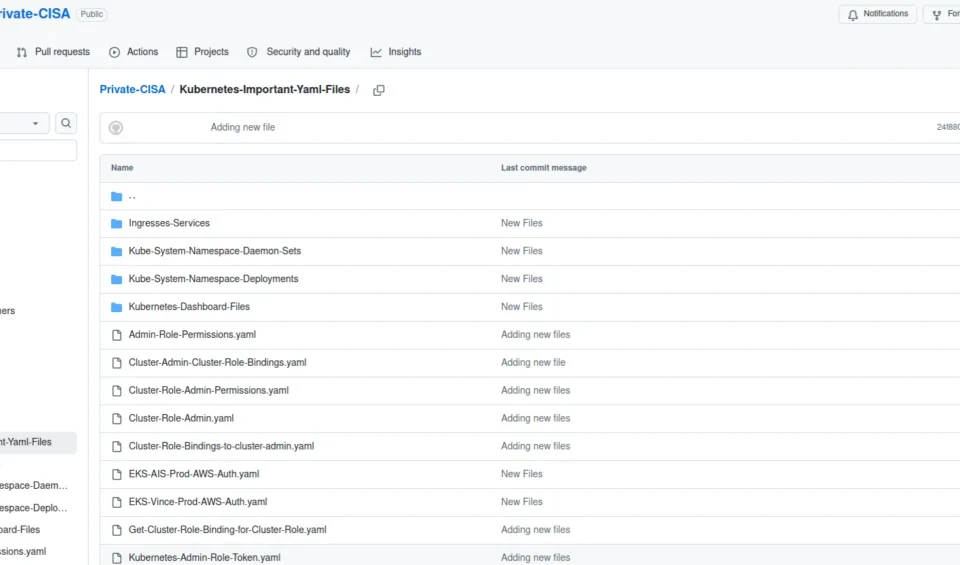
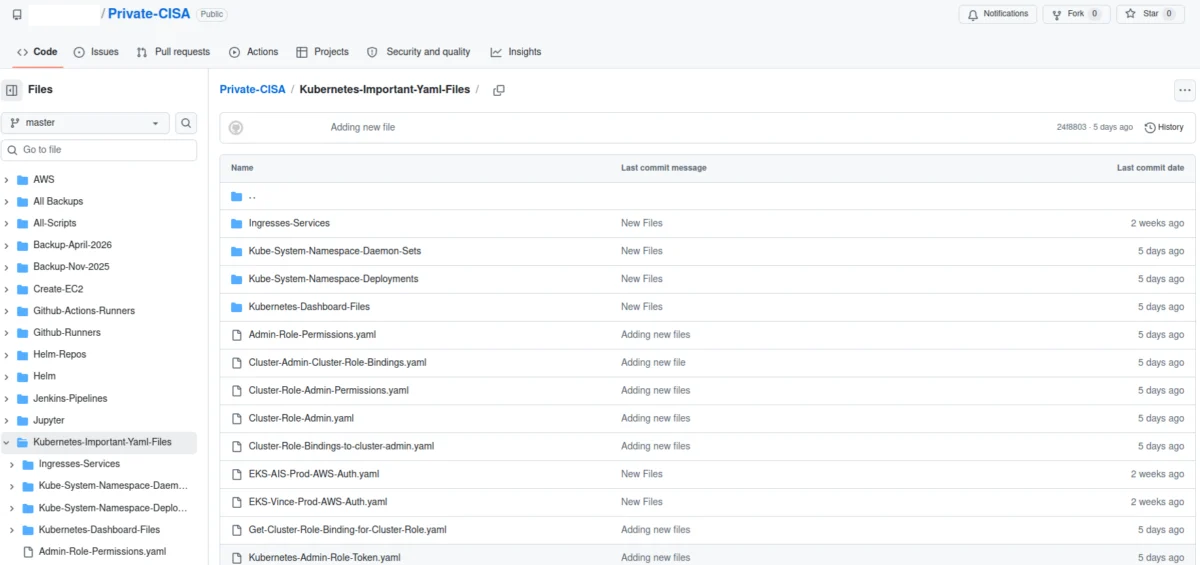
In an incident described by security researchers as one of the most egregious government data leaks in recent history, a public GitHub repository maintained by a contractor for the Cybersecurity & Infrastructure Security Agency (CISA) remained exposed to the open internet for months, leaking highly privileged credentials to internal systems and AWS GovCloud environments.
The repository, aptly titled "Private-CISA," served as a repository for internal configuration files, cloud keys, and plaintext passwords. The exposure potentially granted unauthorized actors a roadmap to the inner workings of one of the United States’ most sensitive cybersecurity agencies. The breach underscores a growing vulnerability in the federal supply chain, where third-party contractors—often operating with minimal oversight—possess the "keys to the kingdom" for critical government infrastructure.
The Anatomy of the Leak
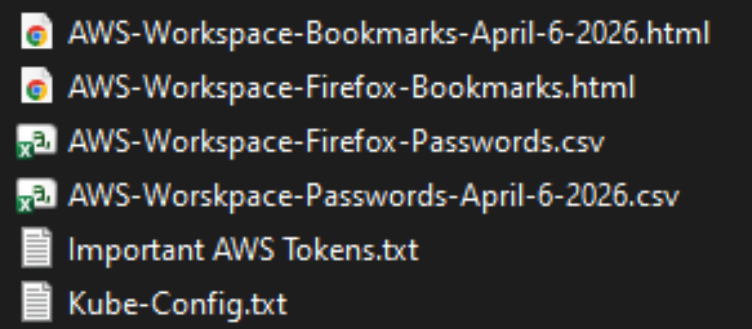
The "Private-CISA" repository was not merely a collection of code; it was an accidental archive of the agency’s operational backbone. According to security researchers who analyzed the repository before it was taken offline, the archive contained:
- AWS GovCloud Administrative Credentials: Access tokens for three high-privilege Amazon Web Services GovCloud environments.
- Plaintext System Credentials: A file explicitly named
AWS-Workspace-Firefox-Passwords.csvcontaining usernames and passwords for dozens of internal CISA systems. - DevSecOps Blueprints: Sensitive documentation detailing how CISA builds, tests, and deploys software within its "Landing Zone DevSecOps" (LZ-DSO) environment.
- Internal Artifact Repository Keys: Access credentials to CISA’s "artifactory," a central repository used to store software packages, which represents a prime target for supply-chain attacks.
Guillaume Valadon, a researcher with the security firm GitGuardian, first identified the repository while performing automated scans for exposed secrets. Valadon expressed profound disbelief during his initial audit, noting that the sheer volume of sensitive data was unprecedented. "Passwords stored in plain text in a CSV, backups in Git, and explicit commands to disable GitHub’s secret detection features," Valadon noted. "I honestly believed that it was all fake before analyzing the content deeper. This is indeed the worst leak I’ve witnessed in my career."
Chronology of the Exposure
The timeline of the incident reveals a sustained period of negligence, spanning several months of potential exposure.
- November 13, 2025: The "Private-CISA" repository was initialized on GitHub by a contractor employed by Nightwing, a Dulles, Va.-based government contractor.
- November 2025 – May 2026: The repository was actively maintained as a "working scratchpad," with the contractor frequently synchronizing files between work and personal environments. During this time, the contractor specifically disabled GitHub’s automated security features designed to flag the presence of SSH keys and sensitive tokens.
- May 15, 2026: GitGuardian researcher Guillaume Valadon identifies the leak. After receiving no response from the repository owner, he escalated the findings to the broader security community and reached out to KrebsOnSecurity.
- May 2026 (Mid-Weekend): Following inquiries from security researchers and media outlets, the repository was taken offline.
- Post-Removal Window: Even after the repository was deleted, security consultant Philippe Caturegli discovered that the exposed AWS keys remained valid and functional for approximately 48 hours, leaving a critical window of vulnerability open after the initial "fix."
The "Scratchpad" Problem: Technical Failures
The investigation into the repository’s metadata suggests the breach was born of poor security hygiene rather than a malicious insider threat. Philippe Caturegli, founder of the security consultancy Seralys, conducted a technical analysis of the repository’s Git metadata. He concluded that the repository was likely used as a synchronization bridge between the contractor’s secure work device and an unsecured personal computer.
"The use of both a CISA-associated email address and a personal email address suggests the repository may have been used across differently configured environments," Caturegli explained. "The available Git metadata alone does not prove which endpoint or device was used, but the behavior is consistent with an individual operator using the repository as a convenience tool."
Perhaps most alarming was the contractor’s approach to password management. The repository contained evidence of "weak" password practices, where credentials for various internal platforms were constructed using the platform name followed by the year. This pattern—a violation of standard federal security protocols—would allow an attacker who compromised one system to easily guess the credentials for others, facilitating rapid lateral movement across the agency’s network.
Official Responses and Agency Context
CISA, in a formal statement, confirmed it was aware of the reported exposure and had initiated an internal investigation. A spokesperson for the agency stated: "Currently, there is no indication that any sensitive data was compromised as a result of this incident. While we hold our team members to the highest standards of integrity and operational awareness, we are working to ensure additional safeguards are implemented to prevent future occurrences."
Nightwing, the government contractor responsible for the employee who managed the repository, declined to comment, redirecting all media inquiries back to the federal agency.
The breach occurs at a precarious time for CISA. The agency is currently grappling with severe budgetary and staffing constraints. Reports indicate that CISA has lost nearly one-third of its workforce since the beginning of the second Trump administration, a trend driven by forced early retirements, buyouts, and widespread resignations. Analysts suggest that such a massive brain drain likely exacerbates the risks of "shadow IT" and poor security practices, as fewer staff members are available to audit contractor performance or enforce strict DevSecOps governance.
Strategic Implications: Why This Matters
The implications of the "Private-CISA" leak extend far beyond the loss of a few passwords. The repository contained the blueprints for the agency’s software development environment.
"If an attacker gains access to the artifactory, that is a prime place to move laterally," Caturegli warned. "You could inject a backdoor into legitimate software packages. Every time the agency builds or deploys a new service, they would inadvertently be deploying that backdoor throughout their own network."
This scenario represents the "holy grail" for state-sponsored threat actors. By gaining access to the internal build pipelines, an attacker could compromise the integrity of CISA’s entire software supply chain. Because the exposed credentials included administrative access to AWS GovCloud—a platform designed specifically to host sensitive government data—the breach effectively granted external actors the ability to operate within the agency’s cloud infrastructure with the same permissions as a systems administrator.
The fact that the AWS credentials remained active for 48 hours after the repository was deleted highlights a dangerous delay in incident response. In modern cyber warfare, 48 hours is more than enough time for a persistent, well-funded adversary to establish a "beachhead" in a network, install backdoors, and exfiltrate data, ensuring they remain within the environment even after the primary entry point is closed.
Conclusion: A Wake-Up Call for Federal Oversight
The CISA-contractor leak is a sobering reminder that the security of a government agency is only as strong as its most negligent contractor. While CISA claims there is "no indication" of compromise, the reality is that verifying the absence of an intruder in a complex cloud environment is notoriously difficult.
The incident raises fundamental questions about federal oversight of third-party vendors. If a contractor can disable GitHub’s native security warnings and dump administrative keys into a public repository without triggering an immediate alarm at the agency level, the current model of vendor risk management is fundamentally broken.
As CISA continues to navigate budget cuts and staffing shortages, the agency must find a way to enforce rigorous, automated security monitoring for its contractors. Without a paradigm shift—where contractors are held to the same, if not higher, security standards as federal employees—incidents like the "Private-CISA" leak will likely continue to threaten the digital sovereignty of the United States. The "Private-CISA" repository may be offline, but the lessons it provided regarding the fragility of modern federal cybersecurity remain painfully relevant.